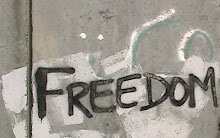
Flags are flying everywhere. It is a joyful celebration of 60th year of the founding of the state of Israel. It marks an extraordinary accomplishment. The economy is thriving, the construction boom continues, the experiment in democracy in a Jewish state is working for some people.. It is admirable that such diverse people from far flung corners of the world have created a functioning, well-run nation. But our delegation experience also exposed a darker side of this creation, a flip side that we learned not many Israelis experience, know about or want to know about: the debilitating consequences for the state of Israel as well as for the Palestinians of the occupation of the West Bank since 1967.
This year also marks the 60 years of existence of the Deheisha Refugee Camp in Bethlehem. It is Beduins being uprooted, unrecognized, having their homes demolished. It is the exercise of power run amuck: the practice of declaring the Beduins villages illegal and having the bulldozers come every six months to demolish several homes at random, only to have the villagers promptly rebuilt them. It is the military taking over a house, herding everyone into one or two rooms, using the rest as a lookout and a military outpost and declaring the house a “closed military zone” which means that no outsider is allowed to enter. How does this enhance the security of Israel? Four Palestinians who were on a wanted list were summarily executed by the Israeli army on a street in Bethlehem while we were nearby in Deheisha refugee camp.
An Israeli soldier of eighteen has immense power over the day-to-day life of the occupied Palestinians. He can order a grandparent of 70 or 80 to stand and wait for an hour, or eight hours, or whatever is his pleasure. He can declare an area a “closed military zone”, and keep people out. The army blocked a road to the village of At Tuwani, in theSouth Hebron Hills, to stop all vehicular traffic to and from the surrounding villages. Just a few days before we arrived in At Tuwani, the villagers managed to clear the block and now enter and exit until the soldiers decide to block it again. We heard from many Palestinians of their relatives or friends being imprisoned for years without any charges or trials.
In Hebron a Jewish settler child age 10-12, eyes full of hate, pushed over a 70 year old man in our delegation and then picked up a rock to throw at us. A bit later a settler spit in the face of a Palestinian. On another occasion, another settler boy kicked a CPT woman and then threw a rock at her while a soldier stood by taking no action. A Palestinian child throwing a rock or kicking a settler or a soldier would be arrested and imprisoned, and most likely labeled a terrorist.
There are 700 checkpoints in the West Bank between Palestinian cities and villages which can be bypassed on alternate roads which wind around hillsides and are in terrible shape How does this provide security for Israel? Our trip from Hebron to a nearby suburb, which should have taken 15 minutes in a public bus, ended up taking 1 hour in a private taxi and was almost three times longer in distance, all because the army that morning decided to close one road leading to the village. When Jewish settlers in the West Bank attack Palestinians, a “closed military zone” is declared and Palestinians are not allowed in, although the settlers can continue as before.
When his house was demolished for a second time, our host handed his baby to a soldier saying, “I now no longer have a home, you take care of him”. For this he was arrested and imprisoned. Much of his brother’s and father’s land was taken over by the settlers, who are even now trying to drive him totally out. A settler who shot and injured our host’s son was punished with three days in prison.
Of course, there is the wall, the cursed wall snaking into Palestinian territory dividing families, communities, land from workers, children from parents, encircling or dividing villages. It is creating hardships which are difficult to imagine. Palestinian society is based on close family ties which stretch out to a large extended family. The wall is making it most difficult to maintain these ties. It has nothing to do with security, but everything to do with grabbing land and extending the settlements.
Hebron has 500 Jewish settlers scattered in a half dozen settlements being guarded by 3000 soldiers. The main street in the old city is closed to Palestinians, essentially cutting the city in two. This is so that the settlers can move freely among the settlements and to the synagogue.
At At Tuwani, soldiers are escorting Palestinian children to school in a convoy to keep them safe from the settlers, who in the past have hit them and thrown stones at them. The settlers also attacked and beat international observers. I have just learned that a few days ago, soldiers failed to escort the children and the settlers stopped them and beat up the observers who tried to protect the children.
I was moved by the hospitality of the Palestinians. They welcomed us and shared their food and their homes with us. Our host family in the Deheisha refugee camp, having suffered so much, still expressed hope for the future. One of our host’s brothers was killed in the siege of the Church of the Nativity, another was deported to Gaza; still, our host expressed hope that one day the nightmare will end.
There are two parallel road systems in the West Bank: paved, well-maintained roads for the Israeli settlers only, and pot-holed, winding, not maintained roads for the Palestinians. The Palestinian roads are blocked at intervals so that the cargo and people have to transfer to other vehicles at the road blocks. How does this serve to secure the nation of Israel?
An Israeli woman who was scheduled to give us a settler perspective lives in a settlement in the area of East Jerusalem. Her son was one of the eight students that were killed just a day before in a religious school in West Jerusalem. We joined her in her house in a gathering called, “sitting shiva’h” where she remembered her son. What a senseless loss of life, a 16-year-old who held such promise. According to her description, he was a good, moral, kind, and decent person. The death of the eight students received widespread publicity world-wide. But what received only cursory mention was the killing of over a hundred Palestinians in Gaza in the preceding week, including children, many of whom also held promise and were good, moral and kind. When will revenge stop and sanity begin?
The last day of our delegation was Palm Sunday. A small group of Palestinians, Israelis and visitors from other countries, with banners painted with the wall and the words, “where could Jesus go”, gathered in Bethany (which is on the Palestinian side of the wall) and following in the footsteps of Christ, walked toward Jerusalem and up to the check- point by the wall. Immediately, a military jeep with several soldiers drove up to the wall, and an officer came out to warn us to disperse. We ignored him and he finally said that we had to leave or he would tear gas us. We continued for a while but eventually left and regrouped in a nearby church-yard only to be followed and carefully watched by soldiers carrying automatic weapons. Again we were told to leave. Christ walked from Bethany to Jerusalem, but today the way is blocked by a 26-foot wall. In our last action, we carried the same banners in a Palm Sunday procession from the Mount of Olives to the old city in Jerusalem.
We met many decent, moral, and kind Israelis who are voicing their concerns about the occupation and taking part in actions of various kinds. But it is not enough. Too many Israelis choose not to know. A reminder found at the entrance to Yad Vashem (the holocaust museum in Jerusalem), “A country is not just what it does, it is also what it tolerates” is a saying that contemporary Israel should heed.
Submitted by Michael.
-------
Thanks Michael for allowing me to post this, its a very good description of the many experiences we had on the delegation.
Saturday, April 26, 2008

Major donors failing Afghanistan due to $10bn aid shortfall
Here was a very interesting article on aid in Afghanistan....
Oxfam Press Release – 25 March 2008
Major donors failing Afghanistan due to $10bn aid shortfall
Forty per cent of aid spending returns to rich countries in corporate profits and consultant costs
The prospects for peace in Afghanistan are being undermined because Western countries are failing to deliver on their promises of aid to the tune of $10bn and because aid going to the country is used ineffectively, according to a new report written by ACBAR, an alliance international aid agencies working in Afghanistan.
Read the report: Falling short: Aid effectiveness in Afghanistan
The international community has pledged $25bn to Afghanistan since 2001 but has only delivered $15bn. The US is the biggest donor to Afghanistan but also has one of the biggest shortfalls - according to the Afghan government between 2002 and 2008 the US only delivered half of its $10.4bn commitment.
The same sources show that over this period the EC and Germany distributed less than two-thirds of their respective $1.7bn and $1.2bn commitments, and the World Bank has distributed just over half of its $1.6bn commitment. The UK pledged $1.45bn and distributed $1.3bn.
An estimated 40% of the money spent has returned to rich donor countries such as the US through corporate profits, consultant salaries and other costs, vastly pushing up expenditure. For example, a road between the center of Kabul and the international airport cost the US over $2.3m per kilometer, at least four times the average cost of building a road in Afghanistan.
Around 90% of all public spending in Afghanistan comes from international aid so the massive shortfall hinders efforts to rebuild infrastructure damaged by over two decades of war, and to ensure the widespread delivery of essential services such as education and health.The report’s author Matt Waldman, Afghanistan policy adviser at international aid agency Oxfam, said: “The reconstruction of Afghanistan requires a sustained and substantial commitment of aid - but donors have failed to meet their aid pledges to Afghanistan.
Too much aid from rich countries is wasted, ineffective or uncoordinated.“Given the slow pace of progress in Afghanistan, and the links between poverty and conflict, the international community must urgently get its act together.“Spending on tackling poverty is a fraction of what is spent on military operations.“While the US military is currently spending $100m a day in Afghanistan, aid spent by all donors since 2001 is on average less than a tenth of that- just $7m a day.”The report says a level of donor under-spending can be expected because of the lack of government capacity, large-scale corruption and challenging security conditions. But the size of the shortfall highlights the importance of donors making concerted efforts to address these issues.The report also shows that a disproportionate amount of aid follows the conflict and is being used for political and military objectives rather than reducing poverty.
Mr. Waldman said: “This is a short-sighted policy. There must be strong support for development in the south but if other provinces are neglected then insecurity could spread.”Looking to the future of aid to Afghanistan, Mr. Waldman said: “The priority now is to increase the volume of aid and ensure it makes a sustainable difference for the poorest Afghans, especially in rural areas. Aid must address Afghan needs, build local capacities and help Afghans help themselves.”
ACBAR’s main recommendations are:
Increased volume of aid, particularly to rural areas.
Transparency by donors and improved information flows to the Afghan government.
Better measurement of the impact, efficiency and relevance of aid.
An independent commission on aid effectiveness to monitor donor performance.
Effective coordination between donors and with the Afghan government.
Read the report: Falling short: Aid effectiveness in Afghanistan
Contact
For more information, please contact:Matt Waldman +44(0) 7812 119 615 or + 93 (0) 700 278 838Sean Kenny +44 7881 655 715
Notes to Editors
1. ACBAR – the Agency Coordinating Body for Afghan Relief - consists of 94 Agencies including Oxfam, Christian Aid, CARE, Islamic Relief and Save the Children
2. Most full-time expatriate consultants working for private companies in Afghanistan cost $250,000 to $500,000 a year, including salary, allowances and associated costs.
All figures below in $mDonor Aid committed 2002 - 2008 vs. Aid distributed 2002 - 2008
US 10,400 vs. 5,022
European Commission 1,721 vs. 1,074
World Bank 1,604 vs. 853
UK 1,455 vs. 1,266
Germany 1,226 vs. 768
Canada 779 vs. 731
Japan 1,410 vs. 1,393
Italy 424 vs. 424
Netherlands 493 407
Norway 399 vs. 277
France 109 vs. 80
Spain 63 vs. 26
Oxfam Press Release – 25 March 2008
Major donors failing Afghanistan due to $10bn aid shortfall
Forty per cent of aid spending returns to rich countries in corporate profits and consultant costs
The prospects for peace in Afghanistan are being undermined because Western countries are failing to deliver on their promises of aid to the tune of $10bn and because aid going to the country is used ineffectively, according to a new report written by ACBAR, an alliance international aid agencies working in Afghanistan.
Read the report: Falling short: Aid effectiveness in Afghanistan
The international community has pledged $25bn to Afghanistan since 2001 but has only delivered $15bn. The US is the biggest donor to Afghanistan but also has one of the biggest shortfalls - according to the Afghan government between 2002 and 2008 the US only delivered half of its $10.4bn commitment.
The same sources show that over this period the EC and Germany distributed less than two-thirds of their respective $1.7bn and $1.2bn commitments, and the World Bank has distributed just over half of its $1.6bn commitment. The UK pledged $1.45bn and distributed $1.3bn.
An estimated 40% of the money spent has returned to rich donor countries such as the US through corporate profits, consultant salaries and other costs, vastly pushing up expenditure. For example, a road between the center of Kabul and the international airport cost the US over $2.3m per kilometer, at least four times the average cost of building a road in Afghanistan.
Around 90% of all public spending in Afghanistan comes from international aid so the massive shortfall hinders efforts to rebuild infrastructure damaged by over two decades of war, and to ensure the widespread delivery of essential services such as education and health.The report’s author Matt Waldman, Afghanistan policy adviser at international aid agency Oxfam, said: “The reconstruction of Afghanistan requires a sustained and substantial commitment of aid - but donors have failed to meet their aid pledges to Afghanistan.
Too much aid from rich countries is wasted, ineffective or uncoordinated.“Given the slow pace of progress in Afghanistan, and the links between poverty and conflict, the international community must urgently get its act together.“Spending on tackling poverty is a fraction of what is spent on military operations.“While the US military is currently spending $100m a day in Afghanistan, aid spent by all donors since 2001 is on average less than a tenth of that- just $7m a day.”The report says a level of donor under-spending can be expected because of the lack of government capacity, large-scale corruption and challenging security conditions. But the size of the shortfall highlights the importance of donors making concerted efforts to address these issues.The report also shows that a disproportionate amount of aid follows the conflict and is being used for political and military objectives rather than reducing poverty.
Mr. Waldman said: “This is a short-sighted policy. There must be strong support for development in the south but if other provinces are neglected then insecurity could spread.”Looking to the future of aid to Afghanistan, Mr. Waldman said: “The priority now is to increase the volume of aid and ensure it makes a sustainable difference for the poorest Afghans, especially in rural areas. Aid must address Afghan needs, build local capacities and help Afghans help themselves.”
ACBAR’s main recommendations are:
Increased volume of aid, particularly to rural areas.
Transparency by donors and improved information flows to the Afghan government.
Better measurement of the impact, efficiency and relevance of aid.
An independent commission on aid effectiveness to monitor donor performance.
Effective coordination between donors and with the Afghan government.
Read the report: Falling short: Aid effectiveness in Afghanistan
Contact
For more information, please contact:Matt Waldman +44(0) 7812 119 615 or + 93 (0) 700 278 838Sean Kenny +44 7881 655 715
Notes to Editors
1. ACBAR – the Agency Coordinating Body for Afghan Relief - consists of 94 Agencies including Oxfam, Christian Aid, CARE, Islamic Relief and Save the Children
2. Most full-time expatriate consultants working for private companies in Afghanistan cost $250,000 to $500,000 a year, including salary, allowances and associated costs.
All figures below in $mDonor Aid committed 2002 - 2008 vs. Aid distributed 2002 - 2008
US 10,400 vs. 5,022
European Commission 1,721 vs. 1,074
World Bank 1,604 vs. 853
UK 1,455 vs. 1,266
Germany 1,226 vs. 768
Canada 779 vs. 731
Japan 1,410 vs. 1,393
Italy 424 vs. 424
Netherlands 493 407
Norway 399 vs. 277
France 109 vs. 80
Spain 63 vs. 26
Tuesday, April 22, 2008
A Favorite Quote
"The ultimate weakness of violence is that it is a descending spiral, begetting the very thing it seeks to destroy. Instead of diminishing evil, it multiplies it.
Through violence you may murder the liar, but you cannot murder the lie, nor establish the truth.
Through violence you may murder the hater, but you do not murder hate. In fact, violence merely increases hate.
So it goes.
Returning violence for violence multiplies violence, adding deeper darkness to a night already devoid of stars.
Darkness cannot drive out darkness: only light can do that. Hate cannot drive out hate: only love can do that. "
-Dr. Martin Luther King, Jr.-
Soon I'm hoping to have an entry on our delegation trip to Palestine. I've added a link on right side to our delegation trip. I'll add some captions soon too, I hope :)
Through violence you may murder the liar, but you cannot murder the lie, nor establish the truth.
Through violence you may murder the hater, but you do not murder hate. In fact, violence merely increases hate.
So it goes.
Returning violence for violence multiplies violence, adding deeper darkness to a night already devoid of stars.
Darkness cannot drive out darkness: only light can do that. Hate cannot drive out hate: only love can do that. "
-Dr. Martin Luther King, Jr.-
Soon I'm hoping to have an entry on our delegation trip to Palestine. I've added a link on right side to our delegation trip. I'll add some captions soon too, I hope :)
Monday, April 21, 2008
Set Apart
In Exodus we read of the Israelites miraculous deliverance out of Egypt. Away from bondage of kings, slavery, and oppression they were on their way to the promised land. God was with the people, as they wandered without a home, God protected them, fought for them, and was to be the only authority they trusted in. As time went on they saw other empires nearby growing, empires that had a king and an army that did the fighting. The more they saw them the more they wanted to take things into their own hands. They wanted a king they could see and touch, they were asking for the very thing they had been rescued from in Egypt. In Jesus for President, Shane Claiborne says, “Something whispered inside the Israelites that they needed a king -to be like the other nations-a paralysis of faith and imagination. That sounds very familiar to some things I hear today. After a while of demanding from God that they be given a king, God finally has enough he reminds them of the things Kings will do. A king would turn their children into soldiers, their earnings into taxes; things that were, “a compromise to the very identity of God. How could they be set apart if they looked like the rest of the world?” (Jesus for President by Shane Claiborne.)
The people then wanted something because it was needed in their eyes, in the world they lived in. A necessary evil.
Now over two thousand years later I feel we still haven’t learned anything, we still haven’t figured out what it means to be “set apart.”
The more I look at non-violence and the life of Jesus the harder I find it to believe how popular violence is among Christians. Many people I talk with agree that war is a horrible thing, and violence should be stopped. Then they continue with….
“But, it’s something that’s needed, in the world we live in. A necessary evil.”
That sounds an awful lot like a paralysis of faith and imagination. Have we really lost faith in that God would take care of us? Have we lost the imagination to find a more creative way to solve our conflicts? When the soldiers came to take Jesus away in the garden and Peter drew his sword, if there ever was a case where Jesus would have been very justified in using the sword what did he do? Not only did he rebuke Peter for using his weapon he healed the ear of the soldier that was injured. What a shock that must have been to rest of the group of soldiers! They were coming expecting a fight and here this guy just heals them instead. What an example. Even after all this so many of us still continue to support military campaigns of violence and vengeance. Something I’m pretty sure God said belonged to him alone. I don’t believe God’s truths change with the world. It’s very clear to me that through the many examples from the Old and New Testament that violence is not the way. Cultures change, but God’s truths remain the same. We are to be a people set apart! Even in the holy wars of the Old Testament the people had drifted from God. In true holy war God did the fighting and the people trusted in God. Even from time of the kings the people had drifted from God’s true nature, then in the New Testament Jesus came as God’s word personified. He didn’t come on a mighty horse as a military leader but he came as a humble, homeless refugee riding a donkey. That is my savior, and the one I serve. Despite everything we, his people, have done in his name, He is still constantly trying to win us back. He hasn’t given up on us and I hope we can continue to seek his grace, mercy, and the true nature of God.
On a personal note, I’m back in Kabul Afghanistan with my wife! We both have found jobs and plan on being here for a year so please continue to keep us in your prayers.
The people then wanted something because it was needed in their eyes, in the world they lived in. A necessary evil.
Now over two thousand years later I feel we still haven’t learned anything, we still haven’t figured out what it means to be “set apart.”
The more I look at non-violence and the life of Jesus the harder I find it to believe how popular violence is among Christians. Many people I talk with agree that war is a horrible thing, and violence should be stopped. Then they continue with….
“But, it’s something that’s needed, in the world we live in. A necessary evil.”
That sounds an awful lot like a paralysis of faith and imagination. Have we really lost faith in that God would take care of us? Have we lost the imagination to find a more creative way to solve our conflicts? When the soldiers came to take Jesus away in the garden and Peter drew his sword, if there ever was a case where Jesus would have been very justified in using the sword what did he do? Not only did he rebuke Peter for using his weapon he healed the ear of the soldier that was injured. What a shock that must have been to rest of the group of soldiers! They were coming expecting a fight and here this guy just heals them instead. What an example. Even after all this so many of us still continue to support military campaigns of violence and vengeance. Something I’m pretty sure God said belonged to him alone. I don’t believe God’s truths change with the world. It’s very clear to me that through the many examples from the Old and New Testament that violence is not the way. Cultures change, but God’s truths remain the same. We are to be a people set apart! Even in the holy wars of the Old Testament the people had drifted from God. In true holy war God did the fighting and the people trusted in God. Even from time of the kings the people had drifted from God’s true nature, then in the New Testament Jesus came as God’s word personified. He didn’t come on a mighty horse as a military leader but he came as a humble, homeless refugee riding a donkey. That is my savior, and the one I serve. Despite everything we, his people, have done in his name, He is still constantly trying to win us back. He hasn’t given up on us and I hope we can continue to seek his grace, mercy, and the true nature of God.
On a personal note, I’m back in Kabul Afghanistan with my wife! We both have found jobs and plan on being here for a year so please continue to keep us in your prayers.
Saturday, April 5, 2008
Where Jesus really is....
From Justice in the Burbs by Will & Lisa Samson.
Meditation by Claudia Mair Burney
"Jesus lives next door. He's an eight-year-old girl and her three-year-old brother. The Son of Man looks like those starving Ethiopian children. He only gets breakfast and lunch at school, when he makes it. He's mama is a crack whore. Nobody knows where his daddy is. I heard his mama lets her "Johns" do things to him.
Poor King of Kings.
Jesus is two houses down and has six children. Now he's pregnant with the seventh. I don't know if he hasn't figured out what birth control is, or what, but how does he expect his husband to feed all those babies on that salary? And you know with all those kids the Lord of Lords can't work. That means hardworking taxpayers' money has to go for Christ's food stamps!
He needs to get fixed.
The Lord is a crazy man-paranoid schizophrenic. If he doesn't take his medication, he walks up and down the street, cussing and spitting on everybody he passes. He's homeless. Nobody knows where his family is-if he's got one. Digs out of the trash cans for food. Somebody ought to get him off the streets.
Jesus is nothing but a nuisance.
I'm starting to see the Son of God everywhere I go. He's always crying or begging or looking pitiful. Why doesn't he pull himself up by his bootstraps? This is America! Makes me mad. He's ruining our neighborhood.
Somebody ought to do something about him.
Somebody."
Meditation by Claudia Mair Burney
"Jesus lives next door. He's an eight-year-old girl and her three-year-old brother. The Son of Man looks like those starving Ethiopian children. He only gets breakfast and lunch at school, when he makes it. He's mama is a crack whore. Nobody knows where his daddy is. I heard his mama lets her "Johns" do things to him.
Poor King of Kings.
Jesus is two houses down and has six children. Now he's pregnant with the seventh. I don't know if he hasn't figured out what birth control is, or what, but how does he expect his husband to feed all those babies on that salary? And you know with all those kids the Lord of Lords can't work. That means hardworking taxpayers' money has to go for Christ's food stamps!
He needs to get fixed.
The Lord is a crazy man-paranoid schizophrenic. If he doesn't take his medication, he walks up and down the street, cussing and spitting on everybody he passes. He's homeless. Nobody knows where his family is-if he's got one. Digs out of the trash cans for food. Somebody ought to get him off the streets.
Jesus is nothing but a nuisance.
I'm starting to see the Son of God everywhere I go. He's always crying or begging or looking pitiful. Why doesn't he pull himself up by his bootstraps? This is America! Makes me mad. He's ruining our neighborhood.
Somebody ought to do something about him.
Somebody."
Subscribe to:
Posts (Atom)